Tuesday, June 8, 2010

Oatmeal Breakfast


There are very few breakfast cereals that are safe for Celiacs. Most of the General Mills Chex line are safe (although some Celiacs seem to react to an unknown ingredient in Chex, so even that isn't a given). Envirokidz (a division of Nature's Path) makes a line of kid-friendly "sugar cereals" (although the sugar content is not as high even as many "healthy" cereals on the grocery store shelves). There are a handful of other companies which make cereals without gluten or barley malt, but most of them either make no guarantee at all about cross-contamination in manufacturing, or there have been too many reports of quality control problems for me to feel comfortable with them.

And so we bring forth the humble Oatmeal once again.

I know what you're going to say next: "But I don't need instructions to make oatmeal!" And you're right. But after considerable thought I have come up with a recipe which has a few extra ingredients to make oatmeal a special friend to Celiacs.

Ingredients (Serves 3):
1.5 c. Bob's Red Mill Gluten-Free Quick Cooking Rolled Oats
3 c. Water
1 TBSP Slippery Elm Powder
1 TBSP Coconut Oil
3 TBSP Brown Sugar

Ok, um... what's up with the Slippery Elm Powder? What is it, anyway?

Slippery Elm Powder is soothing and healing to the gut -- and Celiac disease damages the intestinal tract. Adding Slippery Elm Powder to your diet is supposed to help it heal. The way you're "supposed" to take it is mixed into tea or boiled up as if it were a tea, and drink it. It has a kind of interesting, sort of nutty smell that is not unpleasant. But I have yet to figure out how to make myself drink it every day. Maybe it's just that I hate tea, which could be a big factor, because the Slippery Elm itself really doesn't taste bad. But I just can't bring myself to get my daily dose of Slippery Elm.

Then I had an "Aha!" moment. The instructions on the bottle say to boil it in water, and then drink it. Well... you have to boil water anyway to make oatmeal, right? So here's what I did:

• In a saucepan, combine water and Slippery Elm. Bring to a boil, stirring occasionally.
• Reduce heat to low and stir in oatmeal. Add Coconut Oil and Brown Sugar. Cover and simmer for 3-5 minutes, stirring occasionally.
• Remove from heat and serve. Add favorite oatmeal toppings.

I added coconut milk and a handful of Craisins. My son decided to add a dollop of peanut butter, a trick he learned from his grandfather (and it's surprisingly tasty that way).

There are a number of great health benefits to Coconut Oil as well, and those of us with compromised digestion and absorption issues can use all the help we can get! In this recipe, I used Nutiva brand Virgin Coconut Oil, which I purchased from Amazon.com.

The oatmeal comes out quite good -- much more flavorful than just boring oatmeal with sugar added at the end. You don't really taste either the Slippery Elm or the Coconut directly, although I think they both add a richness which is pleasant.

Sunday, June 6, 2010

What about Frozen Family Dinner Night?


One of the scariest things about moving your family to a special-needs diet is the realization that your old lazy-day standbys just aren't going to work for you anymore. No longer can you turn to a Stouffer's frozen lasagna to bail you out when you really need to take a sick day.


This is one of those days for me.


I don't really have much on hand at the moment, either. So I sent a text message to my husband at church and asked him to pick up chili ingredients. Problem is, he's not going to get home soon enough and I need to get started. The cool thing about chili that I've discovered is that you can start it going and add to it in stages.


I started by getting a couple of packages of lean ground beef out of the freezer and putting them on defrost in the microwave. Usually I like to brown my meat before I put it in the chili, but this is just not going to work for me today. I feel pretty crummy. (The beef is from some locally raised cow; it would behoove you to befriend a local farmer and buy your meat in bulk. You get better quality stuff for a lower price compared to what you can find in a grocery store.)


Next, I chopped up some bell peppers. Today I used two green, one red, and one yellow. I placed the peppers in my crock pot and moved on to the onion -- one large white onion, chopped to bits.


By the time I was done chopping, my meat was pretty much defrosted. Since it was still a bit frozen, I further chopped it up into small bits, and added it to the crock pot. On top of that, I added a large can of diced tomatoes (organic, from Trader Joe's).


Normally, I would now move on to the spices and things, but I was absolutely spent for the moment. So I turned on the crock on high and settled in to wait for the husband to get home with further ingredients.


About an hour later, he came home with some fresh cilantro and a large (approx 15 oz) can of mild chili peppers. He chopped about a cup worth of fresh cilantro and added it to the chili, chopped up the entire can of chili peppers in the food processor, and added that (juice and all), and then started rummaging through the spice cupboard. So including what I'd already thrown in, the chili now has:

3 lbs very lean ground beef

1 large (20 oz) can of diced tomatoes

4 bell peppers, chopped (green, red, and yellow)

1 large white onion, chopped

1 cup fresh cilantro, chopped

1 large can of mild chili peppers, chopped

2 cans (8 oz each) tomato sauce

1/2 cup dry sherry

1/8 cup minced garlic (I keep a jar in the fridge at all times)

2 TBSP paprika

1 tsp ground cumin

3 TBSP dried oragano

1 tsp dried thyme


We continued cooking in the crock pot on high for another 5 hours -- so 6 hours total from the time I put the meat in it. The chili goes beautifully with corn bread, either southern fried (which is naturally gluten free) or Bob's Red Mill gluten-free corn bread mix. But tonight, we served with warm corn tortillas.


This is a flavorful but mild chili. I didn't use anything spicy at all in it today, simply because I wasn't in the mood for spicy. Some chili powder or a jalapeƱo or two would give it a kick, if desired.


Who says fresh cooking can't be easy? Ok, it was a little more work than popping a frozen lasagna in the oven, but not much. And it's a whole lot better and healthier. Plus, the leftovers get better with age. I always make enough to freeze portions for later and put some in the fridge for lunch the next day. In fact, we will probably only eat half the chili tonight (at the most, if the boys are really hungry). I will divide up what I freeze into at least two portions. They can be re-heated and eaten alone, or mixed with a can of pinto beans to stretch them further. So next time I need a "sick day," I really will have a frozen meal to heat and serve!

Tuesday, May 25, 2010

What's the deal with OATS?


Ok, so if you're reading this blog, you've probably heard that gluten resides in wheat, all its derivatives (i.e. spelt), barley, rye, and sometimes oats.


Sometimes Oats? Is that kind of like A E I O U and sometimes Y?


The short answer: Yes. It's pretty much exactly like that.


I am going to resist the temptation to write a research paper about oats and gluten, and avoid all the technical jargon while I explain this rather confusing concept. I'm trying to make this a user-friendly beginner's guide, not an academic medical journal article, after all.


All grains contain some form of "gluten." Gluten, technically speaking, is just the protein found in grain. But the gluten we are concerned about is the one that comes in wheat, barley, and rye. Why these three? Well, I don't think anybody knows the answer to that yet (and actually there are people who cannot digest ANY grain gluten and must go on a grain-free diet). What we do know is that the "gluten" or protein in these three problematic grains are almost identical and in a Celiac the body reacts to all three in the same way. The part of the gluten that a Celiac responds to is called gliadin, and is only present in these three grain families. There are a few people out there who cannot tolerate wheat gluten but do OK with barley and rye gluten, but for the most part, if you react to one, you'll react to the others (the difference for most people is in quantity, not quality; barley and rye, and even spelt for that matter, contain much lower levels of gluten/gliadin compared to wheat).


So, what does that have to do with oats? Well, oats have a different form of gluten which is similar to the gluten in wheat, barley and rye. But it's not identical. Most Celiacs can tolerate a moderate quantity of oats in their diets with no increase in symptoms and no laboratory evidence of damage. BUT... and there's a big BUT after this:


In modern agriculture, oats are typically rotated with wheat crops in the field. They are then harvested on the same machinery, trucked in the same trucks, milled in the same mills, and packaged in the same plants alongside wheat and other grains. Virtually all oats you would buy off a store shelf are contaminated with wheat gluten. Most celiacs WILL react to eating, for example, your average Quaker oats off the grocery store shelf. They may not react every time, since the level of contamination will vary from one batch to the next, but a Celiac eating oats is kind of like playing Russian Roulette with the intestines.


But oats are healthy and yummy and so versatile! And there is help! It is possible to purchase certified gluten free oats from various sources. If you have Celiac Disease, these oats will probably be safe for you. Remember that some Celiacs will still react to oats because they are fairly similar in protein structure compared to wheat, but most will do okay with them. Also remember that if you have been on a low-fiber diet for a while because you took all the delicious and nutritious whole grains out of your diet, a sudden and drastic change can really upset your digestive system; so take it easy when you start out on the oats!!


And now for a recipe!


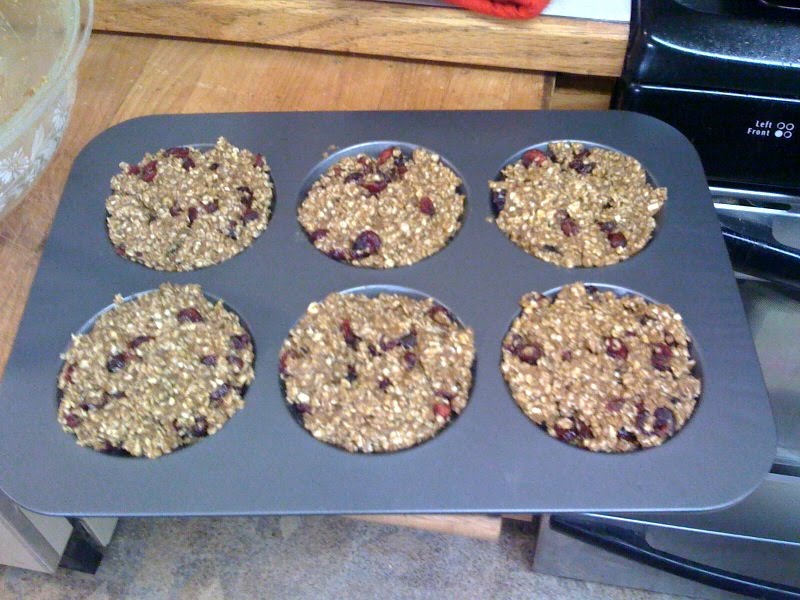
Oatmeal Rounds

Please note that I am including brand names with some of my ingredients. This is only to help you with your shopping; you can substitute other brands as you see fit.


Preheat oven to 350° F

Prepare a Muffin Top Pan by spraying liberally with Pam or similar non-stick spray.

In a large mixing bowl, combine:

• 2 c. Bob's Red Mill Gluten-Free Quick Cooking Rolled Oats

• 1/4 c. Honeyville Blanched Almond Flour

• 1/4 c. Bob's Red Mill Gluten-Free Buckwheat Flour

• 1/4 c. Bob's Red Mill Gluten-Free Coconut Flour

• 3/4 c. Brown Sugar

• 3/4 tsp Ground Cinnamon

• 1/4 tsp Sea Salt

• 1/2 tsp Arrowroot starch (I have no idea whether this actually makes a difference; try leaving it out if you don't have any)

Stir together, and then add:

• 3 eggs

• 6 TBSP Canola Oil (I think coconut oil might work well, too, but I don't have any at the moment)

Mix thoroughly with your spoon or spatula. Then mix in:

• 3/4 c. Craisins (dried cranberries)


Press into the muffin top pan. It should be just enough for 6 large "rounds" about the size of a large muffin top. If you don't have a muffin top pan, try a 9X9 cake pan and make bars, but you may want to line it with parchment first; these things are hard enough to get out of the muffin top pan without breaking them.

Bake at 350° for 20 minutes. Cool before attempting to remove from pan.


These turned out to be very very good, and disappeared rather quickly. They would be well-suited for a portable breakfast. Care in packing might be in order for long trips, such as a backpacking or camping trip, as they are not super sturdy and will fall apart if handled roughly.


Why am I here?

Now that's a loaded existential question, isn't it?


To clarify, the question really is: Why am I blogging?


After all, there are a million wonderful websites for gluten-free and gluten-free/casein-free cooking, including more blogs than I can count. Why do we need another one?


Well, maybe we don't. But I need another one. I need a blog written by someone like me. Someone who is naturally kitchen-challenged. Someone who once would have cooked everything out of a box if she could have. Someone who used to think that mixing a can of cream-of-stuff soup in with some vegetables and meat actually created a balanced meal.


Someone who, through necessity rather than by choice, has been proven wrong.


Don't get me wrong, I love the contributions of people like The Gluten-Free Girl. I don't know how I could have ever started out on this journey without her, in fact.


But I wasn't a "Foodie" before I went GF; and I'm not married to a professional chef. Sometimes the recipe blogs are just way over my pay grade. Also, I think it would help to learn from other experimenters' failures, not just their successes.


So, this is a blog for other people like me, if they exist. People who are faced with the prospect of cooking everything from scratch, not out of a love of the kitchen, but out of pure, raw necessity. People who have culinary problems to solve, such as:

• What do we eat when we go camping?

• How do I keep from overburdening my family because of one person's special diet?

• What the hell is Kwinoah anyway, and what do I use it for? (Psst. It's spelled Quinoa and pronounced Keen-Wa)

• How do I survive without bread? Crackers? OMG -- PIE!!!!

• But I'm an abject failure in the kitchen! (don't worry -- so was I; well... I still am, much of the time).

• I don't have time to cook!

• But isn't Papa Murphy's an essential food group?


So... This is a general "how do I survive on a gluten-free and/or casein-free diet?" blog. I am not an expert. If you came here looking for expert advice, I will try to get up some links for you later. What I am is a person who has been muddling through the gluten-free world for about three years, and, more recently, the dairy-free world as well. And, so far, not only have I survived, but I eat better than I ever knew was possible before.


So think of this as Beginner's Odyssey in gluten-free cooking. I've learned a lot, but my beginning point was so low, I still have a long way to come. Won't you come along with me and we'll learn together? We'll explore recipes, experiments, kitchen contamination tips, substitute foods, Holidays (THANKSGIVING????), shopping, social implications of the "special" diet, eating out, and all things related to the Gluten-Free lifestyle.


By way of introduction, I will tell you I'm a 30-something gluten-intollerent (possibly Celiac but untested -- we'll get into testing issues some time in the future) mother of 2.5 children (two in high school and one "in the oven"). One of my sons is also intolerant of Gluten and mildly intolerant of Casein; so most recipes will be free of both gluten and casein. I also have an amazing, wonderful, intelligent, and supportive husband who also happens to be a talented cook, and we live on a small hobby farm raising small sheep.